Water Damage Restoration
Water Damage Restoration in Palm Beach & Broward
1st Class Restoration removes water, dries the structure and checks for mold after burst pipes, AC leaks, ceiling leaks, slab leaks, appliance leaks and leaks from the unit upstairs. We work in homes, condos and businesses across Palm Beach and Broward counties, Florida. Call (728) 233-1041, 24/7, for a free on-site estimate.
Key facts
- Common causes
- AC condensate leaks, burst or failed supply lines, water heaters, washing machines, slab leaks, sewage backups, roof and storm leaks
- Drying window
- The U.S. EPA advises drying wet materials within 24 to 48 hours to help prevent mold
- What we do
- Extract water, remove what can't be saved, dry the structure and confirm it with moisture readings
- Not included
- Rebuild, drywall or flooring replacement, and plumbing or roof repairs
- Service area
- Palm Beach County and Broward County, Florida, plus parts of Miami-Dade County
- Hours
- 24/7, including nights, weekends and holidays. Call (728) 233-1041
- Estimates
- Free on-site estimates. For mold, a free estimate is not a mold assessment.
- Florida mold licenses
- Mold Assessor MRSA5754 and Mold Remediator MRSR5743, held by Daniel J. Mustelier (verify)
- Payment
- You pay us directly. We don't bill insurance companies or handle claims; we provide documentation you can submit to your insurer.
- Ownership
- The restoration brand of 1st Class Facility Services, a veteran-owned company
Water keeps spreading until someone stops it. We find the source, remove the water and dry your home or business properly, so the damage stops and mold doesn't get a start.
What causes most water damage in South Florida
- AC condensate lines that clog and overflow drain pans, often in attics and closets
- Failed supply lines on toilets, sinks, ice makers and washing machines
- Water heaters that rust through or burst
- Roof leaks and wind-driven rain during summer storms and tropical systems
- Slab leaks and cracked cast-iron drain lines in older homes
- Sewage and drain backups
Common leaks we clean up
Water coming through the ceiling
A stain, drip or sag in the ceiling means water has already spread across the drywall and insulation above it. The usual sources are an AC air handler in the attic, a bathroom or laundry room upstairs, the unit above you, or the roof. Stay out from under a sagging ceiling, and turn off power to nearby light fixtures if you can do it from a dry spot. We find how far the water went, remove wet insulation and drywall that can't be saved and dry the space above the ceiling. We don't repair roofs, so a roof leak also needs a licensed roofer.
AC and air handler leaks
A clogged condensate drain line or a rusted drain pan is a common source of water damage in South Florida homes and condos. Water soaks the closet floor, baseboards and walls around the air handler, or the ceiling below an attic unit. See AC leak water damage for what to do first.
Leaks from the condo or apartment upstairs
If water is coming from the unit above, tell that neighbor and your association or building manager right away so the water can be shut off, and take photos. We dry and clean your unit and can work with the association or manager so every affected unit gets dried, not just yours. Who pays for what is between the owners, the association and their insurers, and we stay out of that.
Slab leaks
A slab leak is a leak in a water or drain line under or inside the concrete floor. Signs include damp spots on the floor, a warm spot (on a hot water line), buckling wood or loose tile, a musty smell, or a water bill that jumps for no reason. A licensed plumber finds and fixes the pipe. We dry the flooring, walls and cabinets around it and remove materials that can't be dried.
Water heater, washing machine, dishwasher and ice maker leaks
Supply lines and appliances fail without warning, often behind or under the appliance where you can't see it, and the water runs under baseboards, cabinets and flooring. Shut off the water to the appliance, or the main, and have the hidden moisture measured instead of just mopping the floor.
Wet drywall and water inside walls
Drywall wicks water up from the floor and holds it inside the wall. If the water was clean and it's caught early, it can often be dried in place. Drywall that's soaked through, touched by contaminated water or already growing mold usually has to come out. We remove it and dry the wall cavity. Putting new drywall back is a job for your contractor.
Why the first 24 to 48 hours matter
Drywall, insulation, wood and carpet pad soak up water you can't see. The U.S. EPA advises drying water-damaged materials within 24 to 48 hours to help prevent mold growth. In South Florida's heat and humidity, that window is easy to miss.
That's why we measure moisture in walls, floors and cabinets instead of judging by what looks dry. Surfaces can feel dry while the material behind them is still wet.
Clean water, gray water and contaminated water
Not all water damage is the same, and the type of water decides what can be saved.
- Clean water, like a broken supply line. If we get to it quickly, many materials can be dried in place.
- Gray water, like a washing machine or dishwasher overflow. It carries soap, food and bacteria, so cleaning matters as much as drying.
- Contaminated water, like sewage, toilet overflows with waste, or floodwater from outside. Porous materials it touches usually have to be removed.
Homes, condos and commercial properties
We work in single-family homes and condos, and with property and facility managers at offices, retail stores, restaurants, medical offices and warehouses. On commercial jobs we plan the work so unaffected areas can stay open when it's safe to.
Insurance and payment
You pay us directly. We don't bill insurance companies, handle claims or advise on coverage. We give you documentation of the damage and the work that you can submit to your insurance company for reimbursement.
Your policy decides what you need to do and when, so check it or ask your agent. Stopping the water and drying the property shouldn't wait while you sort that out.
More on specific problems: AC Leak Water Damage.
Real work
Photos from our jobs
Real photos from our jobs. We leave out client names and addresses.
-
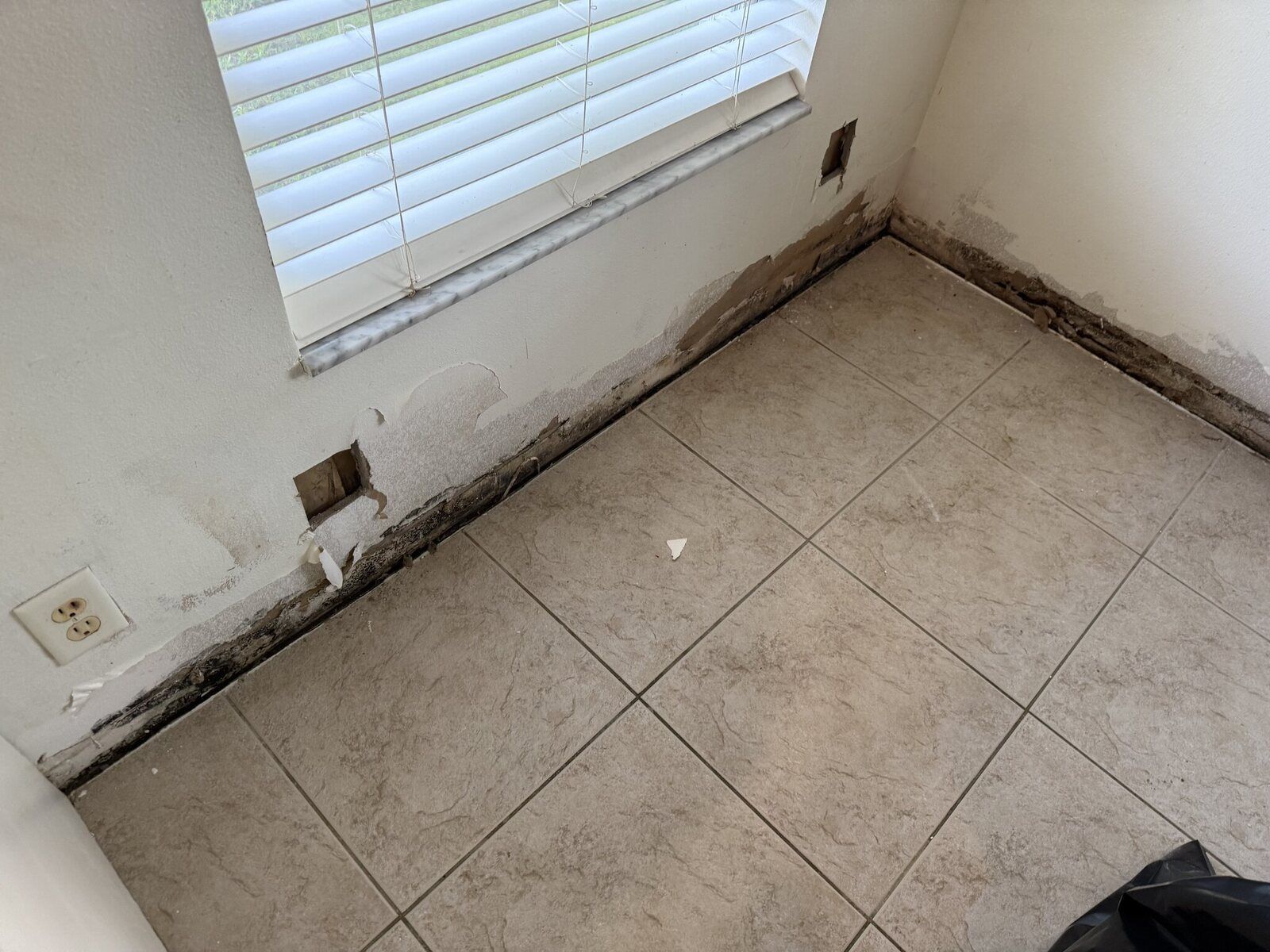
Home water job: wet baseboards and the bottom of the drywall cut out so the wall can dry. -
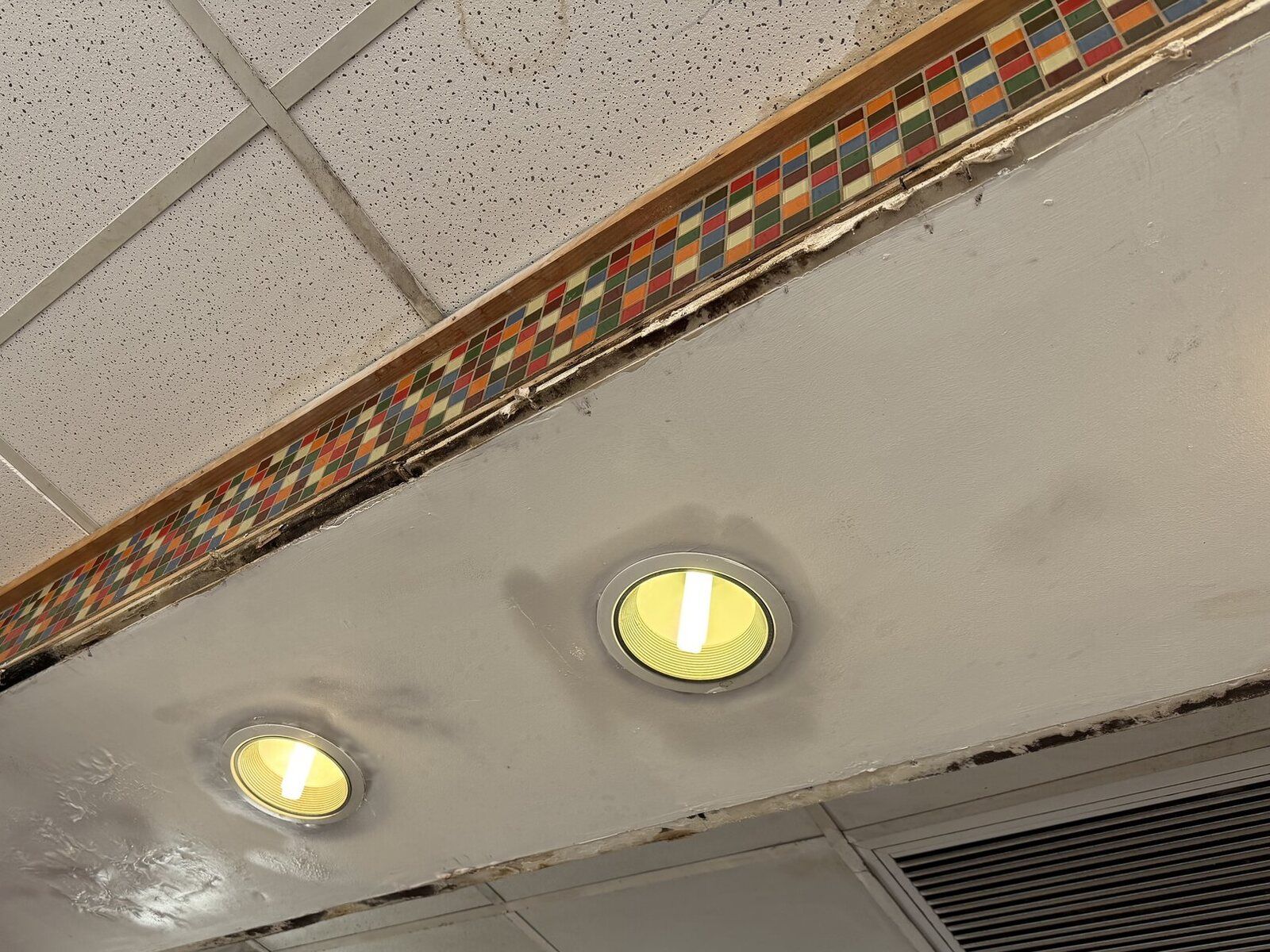
Restaurant job: water stains around the lights on a ceiling soffit. -
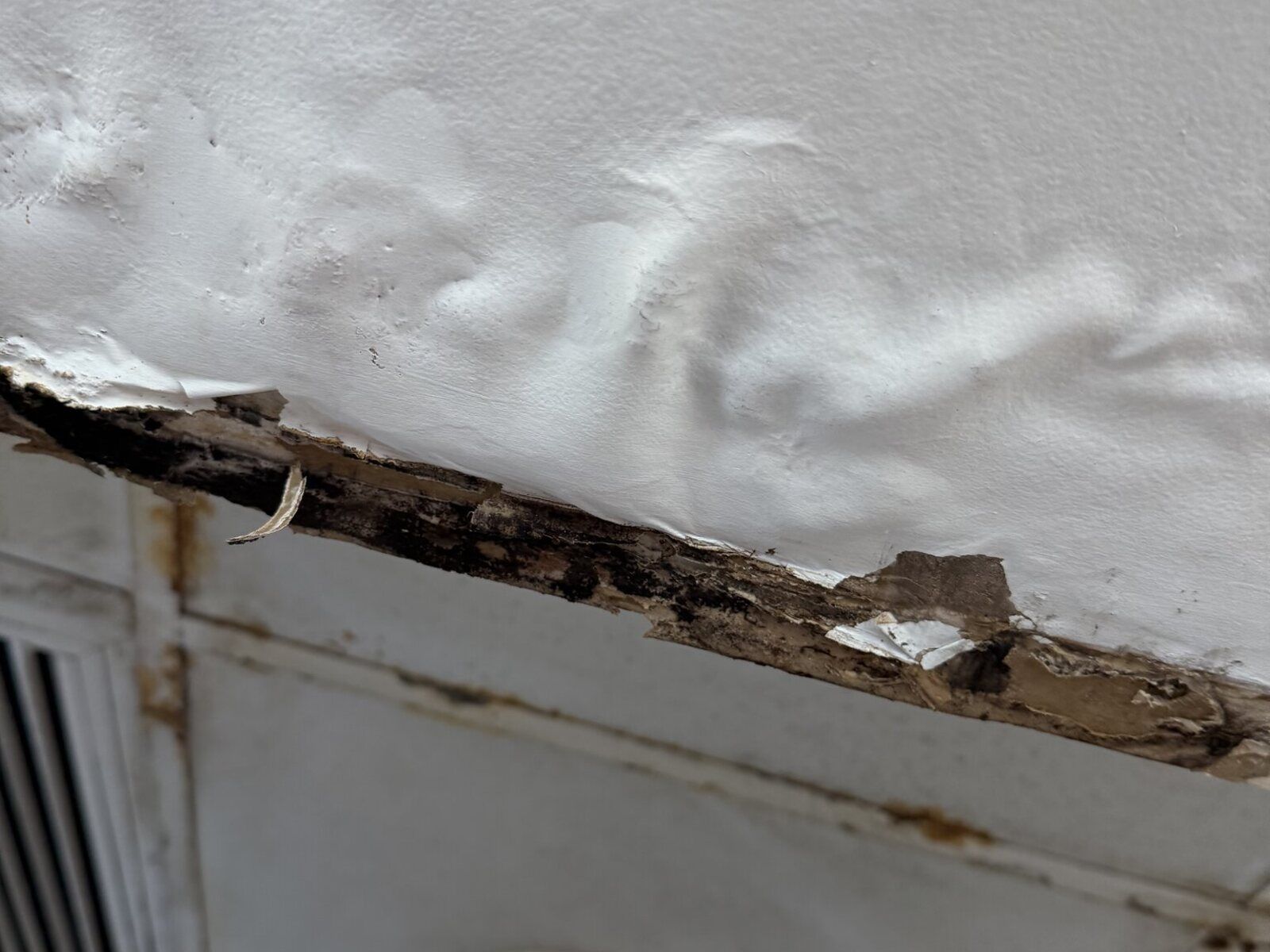
Same restaurant: bubbled paint and water-damaged drywall at the edge of the soffit.
Our process
How we handle water damage jobs
-
Stop the source
Find where the water is coming from and stop it, or tell you exactly who needs to.
-
Measure
Map moisture in walls, floors and cabinets so nothing wet gets missed.
-
Extract
Remove standing water from floors, carpet and other surfaces.
-
Remove what can't be saved
Take out wet insulation, swollen baseboards, carpet pad and anything touched by contaminated water.
-
Dry
Set up air movers and dehumidifiers and check readings until materials are dry.
-
Flag mold
If mold shows up, we stop and explain your options under Florida's mold licensing rules before any mold work starts.
Questions
Water Damage FAQ
Can I dry it out myself with fans?
For a small, clean spill you catch right away, maybe. But water wicks into walls, under flooring and into cabinets, and household fans don't pull moisture out of the air. If water sat for more than a few hours or reached the walls, have the moisture measured.
Will you have to cut open my walls?
Only when it's needed. Clean water caught early can often be dried in place. Drywall that's soaked through, touched by contaminated water or already growing mold usually has to come out.
How fast should water damage be dried?
As fast as possible. The U.S. EPA advises drying water-damaged materials within 24 to 48 hours to help prevent mold growth. The drying itself usually takes a few days, depending on how much got wet and what it's made of. We measure moisture as we go and don't call it done until the materials are dry.
Do I need to call my insurance company first?
Not before you stop the water. Many homeowners policies list protecting the property from further damage as one of your duties after a loss, so shut off the water and get drying started. Whether and when to file a claim is between you and your insurer, so check your policy or call your agent. We don't bill insurers or handle claims. We give you documentation you can submit for reimbursement.
What should I do if water is coming through the ceiling?
Stay out from under the wet or sagging area. If it's coming from upstairs, tell that neighbor or your building manager so the water can be shut off. Turn off power to light fixtures near the leak if you can do it from a dry spot, put a bucket under the drip and call us. Don't poke holes in a sagging ceiling yourself.
Can you fix the leak itself?
We stop the water from spreading and tell you where it's coming from. Repairing pipes, appliances, AC units and roofs is a job for a licensed plumber, HVAC technician or roofer. We handle the water damage: extraction, drying, removing what can't be saved and checking for mold.
Where we work
Water Damage Restoration near you
We serve Palm Beach and Broward counties, plus parts of Miami-Dade County.
More services
Other ways we can help
Mold Assessment
Licensed mold inspection and sampling, with a written report and protocol you can take to any independent licensed remediator.
Learn moreMold Remediation
Licensed, contained mold removal: containment, HEPA air filtration, removal of affected materials and cleaning.
Learn moreStorm & Flood Damage
Hurricanes, tropical storms and flash flooding. Emergency board-up and tarping, water removal, drying and floodwater cleanup.
Learn moreFire & Smoke Damage
Soot and smoke residue cleanup, odor removal, and drying out the water left behind by firefighting.
Learn moreSewage Cleanup
Sewage backups, toilet overflows and drain line failures. Contaminated water removed, the area cleaned, sanitized and dried.
Learn moreRequest water damage help
For active leaks or flooding, calling is fastest: (728) 233-1041.
Text messages are optional. See our Privacy Policy and Terms. We never share your mobile number or text consent with third parties.